News
Why Cyber Wellness Belongs in Every HR Strategy
-
Most companies offer basic cybersecurity training, but Jim Hand from BOXX encourages leaders to go further by tailoring education to everyday life.
-
BOXX’s model goes beyond traditional insurance by combining threat prediction, prevention, and protection for both small businesses and households.
-
Hand highlights that digital wellness, mental health, and cyber wellness will continue to converge in the coming years. As cyber threats evolve, so too will the supports that employees expect from their workplaces.

When you ask Jim Hand what keeps him energized at work, his answer is top of mind: building solutions that genuinely help people. As Head of Partnerships at BOXX Insurance, Jim brings a builder’s mindset from years across telecom and insurance into a space that’s rapidly evolving and deeply affecting people’s lives.
“Cybersecurity has been a focus for businesses for some time and continues to evolve with the changing technological landscape, but in the personal space, it’s still fairly new,” he says. “That’s where we can make the biggest difference, bringing clarity and peace of mind in an area that can feel very overwhelming.”
Why do conversations about cyber risk matter now
Cyber risk isn’t just an IT issue, it’s a people issue. For employees and their families, incidents like identity theft, fraud, and cyberbullying can trigger months of stress, financial fallout, and lost productivity. Jim notes that the financial impact of average losses is around $24,000 per the Canadian Anti-Fraud Centre. That’s a life-disrupting amount, and most people don’t know where to turn when this happens.
Add hybrid work and personal devices to the mix, and the line between “home” and “work” risk is increasingly blurred. “Educating and protecting individuals strengthens organizational resilience, too,” Jim explains. “This is where HR and Benefits professionals can lead.”
BOXX’s human approach to protection
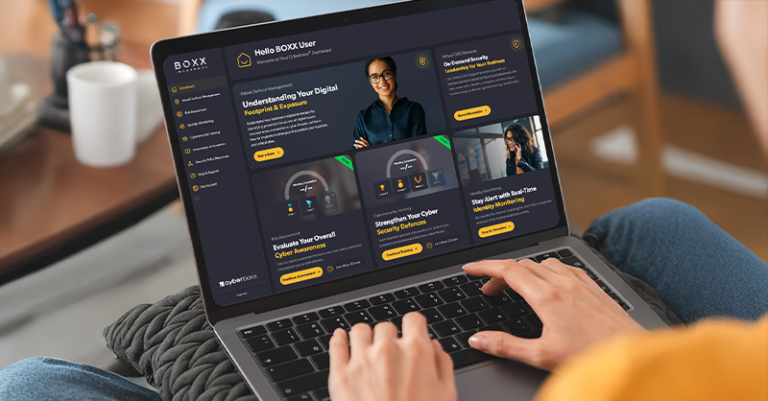
BOXX’s model goes beyond traditional insurance by combining threat prediction, prevention, and protection for both small businesses and households. By making cybersecurity accessible and human, employees and their families can easily access digital support services when they need it most.
“Prevention is better than the cure,” he says. “Our goal is to give people tools that build their digital resilience, whether that’s identity monitoring, credit checks, or dark web scanning. If a breach or digital emergency happens, we’re here 24/7 with judgment-free help so people can get trusted advice in real time.”
He believes reducing stigma is just as important as providing coverage. “Even highly sophisticated organizations get breached,” Jim emphasizes. “We need cultures where people feel safe reporting quickly, without embarrassment, so we can limit harm and speed recovery.”
Why HR leaders should pay attention to cyber wellness
For Jim, cyber wellness belongs squarely within employee wellbeing strategies because the impacts are deeply interconnected. Mental health, financial security, and workplace performance are all affected when someone experiences a cyber incident.
“When people are dealing with anxiety, stress, or financial loss, it shows up at work,” he explains. “Helping employees feel safe online supports their wellbeing and focus, and it sends a powerful message that their employer cares about them.”
He also notes that forward-thinking organizations have an opportunity to differentiate themselves by addressing a growing risk that employees already feel but don’t yet know how to manage.
Building digital confidence through education
Most companies offer basic cybersecurity training, but Jim encourages leaders to go further by tailoring education to everyday life. “Real-life examples help people connect the dots and the faster someone raises a flag, the faster we can help,” he says.
With the rise of AI-enabled scams and voice cloning, the need for responsive, human help is even greater. “The technology behind these threats is advancing quickly. That’s why ongoing education and fast access to trusted support matter more than ever.”
Where to begin as an HR professional
Jim recommends that HR professionals start by reviewing what they already have in place. “Look at your corporate programs and employee benefits,” he says. “Identify the gaps in personal protection and response.” He suggests offering real-time support, giving employees access to tools that prevent risk, and ensuring there’s clear guidance on where to turn when something goes wrong.
Importantly, he adds, organizations should normalize open conversations about mistakes. “Fast reporting is a strength, not a failure,” he says. “The quicker people feel safe to speak up, the faster you can protect them.”
Looking ahead on the evolution of cyber wellness
Jim believes that digital wellness, mental health, and cyber wellness will continue to converge in the coming years. As cyber threats evolve, so too will the supports that employees expect from their workplaces.
“Ultimately, this is about empowerment,” he says. “When employees feel protected and supported, they bring their best selves to work. That’s good for them, and it’s good for the organization.”
This article was originally published in HRPA
About BOXX Insurance
BOXX Insurance helps businesses, individuals and families insure and defend against cyber threats, harnessing the power of ALL IN ONE Cyber Insurance and Protection. Headquartered in Toronto, Canada, with offices worldwide, BOXX is a global, award-winning provider of cyber protection services & cyber insurance coverage.
We're not a typical insurance company. That's by design. We're obsessive about making our clients’ digital worlds safer and more livable; creating real, positive changes for our clients, partners and brokers. With comprehensive, technologically advanced products and services that have a strong emphasis on predicting, preventing and insuring against negative cyber events, BOXX is dedicated to protecting and digitally safeguarding our clients, our brokers' clients and our partners' customers, 365 days a year.
BOXX Insurance Inc. is part of Zurich Global Ventures, a global platform business providing products and services that go beyond traditional insurance. Zurich Global Ventures aims to get closer to customers by offering customized, proactive and digital experiences that empower individuals and businesses to be better prepared for the future.

Related Posts
News
BOXX Announces Cyberboxx® Assist – Cutting-Edge Cyber Services that Build Digital Resilience Amongst Businesses & Homes
BOXX Insurance announced Cyberboxx® Assist, a comprehensive suite of cyber security tools and services designed to help individuals and businesses to cyber threats through risk assessments, compliance tools and 24/7 expert support from real cyber security experts.

21/05/2025
News

BOXX Insurance Inc. announces expansion plan into Latin America
Canadian Insurtech, BOXX Insurance Inc., announces its plan to launch the world’s first fully-integrated cybersecurity and insurance solution in Latin America.
18/09/2018
Sign up for the BOXX Insurance Newsletter
Get the latest updates about Cyber Insurance and Protection with our newsletter.
